Why Choose Laser Metal Machines for Your Manufacturing Needs?
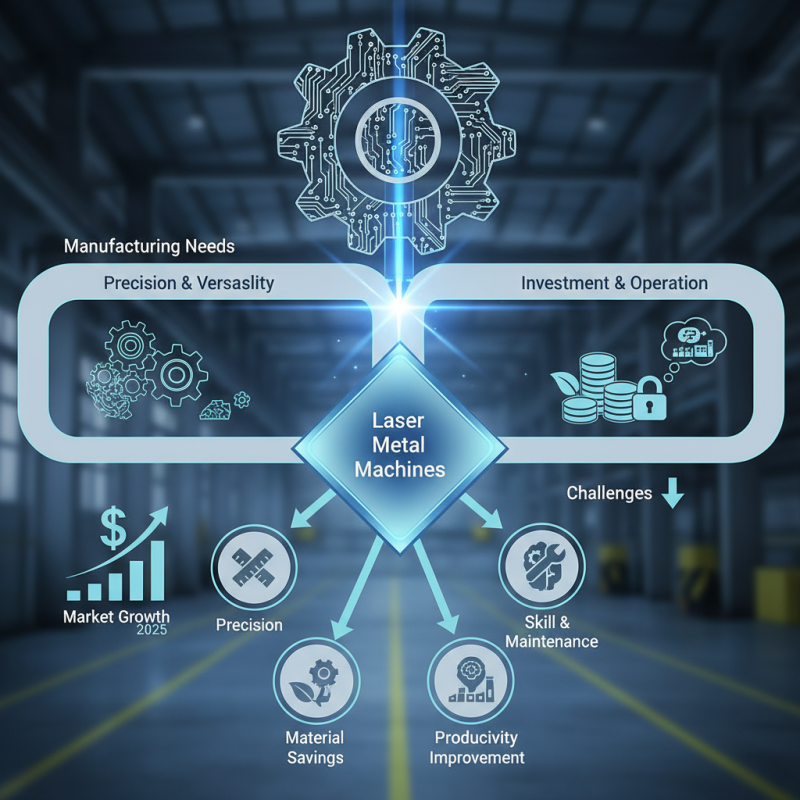
In today's competitive manufacturing landscape, the choice of equipment can significantly impact productivity and efficiency. Laser metal machines have gained popularity for their precision and versatility. According to a report by Markets and Markets, the laser processing market is projected to reach USD 17.9 billion by 2025, demonstrating robust growth potential.
Investing in laser metal machines can lead to considerable improvements in production. They allow for intricate designs and minimal material wastage, appealing to many manufacturers. However, the initial investment is substantial, and not every manufacturer fully harnesses their capabilities. Industry specialists frequently advise on best practices to maximize the benefits of these machines.
Choosing laser metal machines is not just about technology; it requires a thoughtful approach. Many businesses report issues with maintenance and training. While these machines offer high precision, the need for skilled operators presents challenges. Reflecting on these factors is crucial for any organization looking to adopt laser technology in their manufacturing processes.
Understanding Laser Metal Machines and Their Functionality
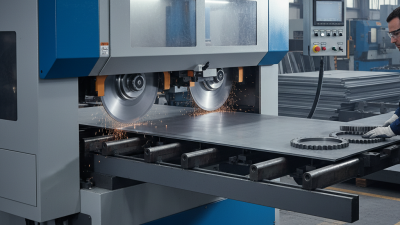
Laser metal machines are revolutionizing the manufacturing landscape. They provide remarkable precision when cutting and engraving various metals. These machines utilize focused laser beams to melt or vaporize material, resulting in clean, intricate designs. Unlike traditional methods, laser technology minimizes waste and error, leading to cost-effective production.
Operating a laser metal machine requires a thorough understanding of its capabilities. Adjusting settings can be tricky. Incorrect settings may lead to burn marks or incomplete cuts. Ensuring the right speed and power is vital. The software interfaces can be intimidating at first. However, once mastered, they unlock endless possibilities for creativity.
The versatility of these machines is impressive. They can handle different materials like steel, aluminum, and copper. This flexibility is appealing to manufacturers in various sectors. However, users should be aware of maintenance needs. Regular checks are essential to sustain optimal performance. Neglecting maintenance can result in costly downtimes and repairs. Balancing innovation with responsibility becomes crucial.
Why Choose Laser Metal Machines for Your Manufacturing Needs?
| Feature |
Description |
Benefits |
| Precision Cutting |
Laser machines offer high precision and accuracy in cutting various metal types. |
Minimizes material waste and improves the quality of finished products. |
| Speed |
Laser cutting increases the speed of production compared to traditional methods. |
Enhances productivity and efficiency in manufacturing processes. |
| Versatility |
Laser machines can process a variety of metals including steel, aluminum, brass, and more. |
Allows flexibility in design and application across different industries. |
| Minimal Tool Wear |
Laser technology does not physically contact the material, reducing tool wear. |
Reduces maintenance costs and increases the longevity of equipment. |
| Environmentally Friendly |
Laser cutting produces less waste and can operate on renewable energy. |
Contributes to sustainable manufacturing practices. |
Advantages of Using Laser Metal Machines in Manufacturing
Laser metal machines are revolutionizing manufacturing. They offer precise cuts and intricate designs. These machines use focused beams of light to melt or vaporize metal. This results in less waste and cleaner edges. Manufacturers benefit from the efficiency and speed of laser processing. Jobs that took hours can now be completed in minutes.
The versatility of laser machines is significant. They can work with various metals, including steel, aluminum, and titanium. This flexibility allows manufacturers to produce a wide range of products. However, there are challenges too. The cost of initial investment can be high for some businesses. Additionally, training staff to operate laser machines requires time and effort.
Despite these concerns, the benefits often outweigh the drawbacks. They create consistent quality and reduce labor costs over time. Rapid prototyping becomes feasible, allowing for quick design adjustments. However, companies should carefully assess their needs and capabilities before diving in. This ensures they maximize the potential of laser technology.
Comparing Laser Metal Technology with Traditional Methods
Laser metal technology has revolutionized manufacturing processes. Unlike traditional methods, it offers precision and efficiency. The cutting process is highly accurate, allowing for intricate designs. This level of detail is often hard to achieve with conventional techniques, which may produce rough edges or unintended variations.
However, the transition to laser systems is not without challenges. Initial costs can be high, and operators need specialized training. Traditional methods, such as milling or grinding, may seem simpler and more familiar. Many manufacturers might hesitate to adopt new technologies due to fear of potential issues. Additionally, maintenance of laser machines can be demanding, requiring consistency and care.
Despite these hurdles, many are rethinking their manufacturing strategies. The speed at which laser machines operate can reduce lead times significantly. Moreover, energy consumption is often lower than that of traditional machinery. However, navigating this shift requires careful consideration and a willingness to adapt. Embracing new technology may seem daunting, but the potential benefits can be substantial.
Applications of Laser Metal Machines Across Various Industries
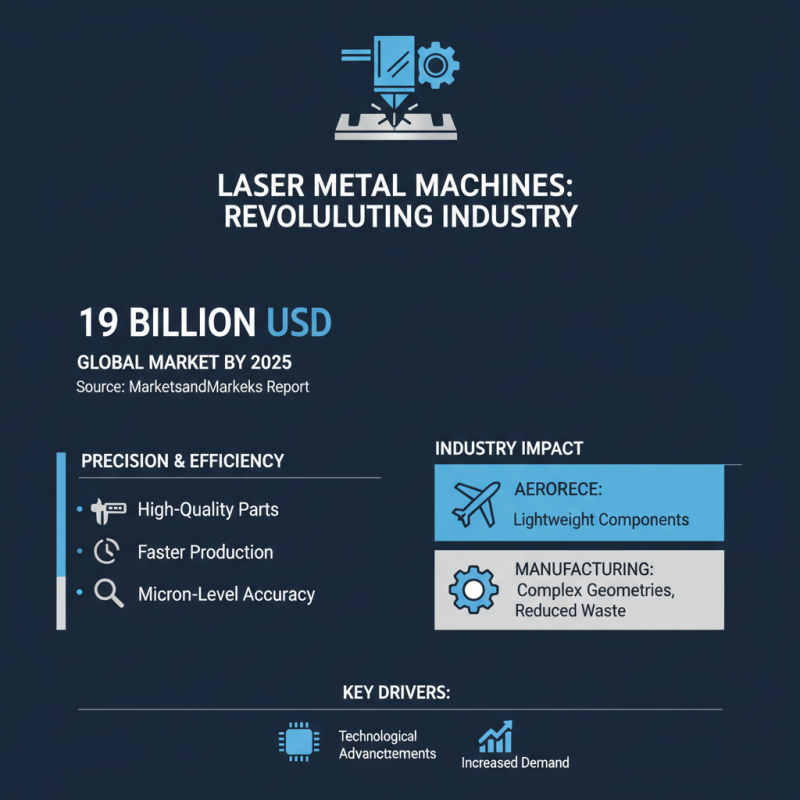
Laser metal machines are revolutionizing various industries with their precision and efficiency. In aerospace, these machines create lightweight components. A report by MarketsandMarkets estimates the laser metal market will reach $19 billion by 2025. This growth is driven by advancements in technology and increased demand for high-quality parts.
In automotive manufacturing, laser machines enhance productivity. They are used for welding, cutting, and marking. The ability to produce intricate designs reduces material waste, making processes more sustainable. According to a study, 70% of automotive manufacturers use laser technology in some capacity, boosting overall efficiency.
Tips: Ensure proper maintenance of your laser machine. Regular check-ups can prevent costly downtime. Choosing the right machine for your specific needs is vital. It can impact your production quality and speed significantly. Always analyze your capacity versus the machine's performance. This reflection can lead to better investment decisions.
Future Trends in Laser Metal Machine Technologies for Manufacturing
The future of laser metal machine technologies is shaping the manufacturing landscape. Innovations are rapidly emerging, pushing the boundaries of efficiency and precision. According to a report by Market Research Future, the global laser cutting machinery market is expected to reach $5.34 billion by 2027, growing at a CAGR of 6.83% from 2020 to 2027. This forecast is driven by the increasing demand for automation and smart manufacturing.
Emerging technologies, like fiber laser systems, offer a remarkable edge. They consume less energy and provide higher cutting speeds compared to traditional methods. This could lead to significant cost savings, yet adoption remains slow for some manufacturers. Concerns about initial investment and technical skills can deter progress. Not all facilities are equipped to handle these advanced systems, highlighting a skills gap in the workforce.
Moreover, the integration of artificial intelligence and IoT is gaining traction. Smart systems can analyze data in real-time to optimize processes. However, this also raises questions about data security and system reliability. Manufacturers must carefully weigh the benefits against potential risks. Balancing innovation with practical implementation remains crucial for success in this evolving field.
Future Trends in Laser Metal Machine Technologies for Manufacturing
This chart illustrates the projected growth in various sectors of laser metal machine technology from 2023 to 2028, highlighting the increasing adoption of these machines across different manufacturing applications.