
By using this site you agree to the use of cookies by the company in accordance with the Privacy Policy

Choosing the best depth filtration system in China requires more than comparing catalog prices. Fluid viscosity, particle loading, microbial risk, throughput, and validation needs all matter. A filter that performs well with a clear beverage may fail quickly with a protein-rich bioprocess fluid. The details are physical.
Recent industry research reflects this complexity. The 2024 MarketsandMarkets analysis identifies pharmaceuticals, food and beverages, chemicals, and water treatment as major depth filtration application areas. Grand View Research also reports continued growth in filtration demand, supported by stricter manufacturing controls and expanding industrial production in Asia-Pacific. However, market estimates differ because companies classify depth media, membrane cartridges, and hybrid systems differently. That limitation deserves attention.
Dr. Nicholas P. Cheremisinoff, author of technical works on industrial filtration, emphasizes a practical principle: “Filtration is not simply equipment selection; it is process design.” This view fits the Chinese market, where local suppliers commonly offer cellulose filter sheets, polypropylene melt-blown cartridges, lenticular modules, and sintered media. Each type creates a different balance between retention, pressure drop, extractables, and service life.
For high-solid liquids, graded-density cartridges or filter sheets may provide economical protection. For sensitive pharmaceutical streams, validated lenticular or capsule systems can offer better consistency and closed handling. Yet no option is universally best. Test data should lead the decision. A small pilot run, measured by turbidity, differential pressure, and filtrate volume, can expose assumptions that a product brochure hides.
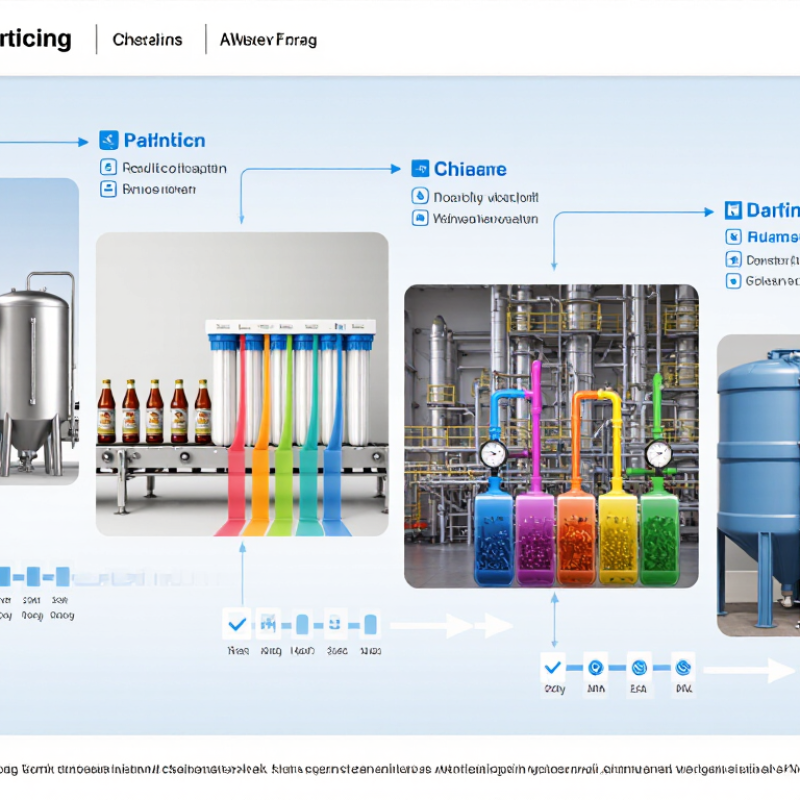
Depth filtration removes particles throughout a porous media bed, not only on its surface. Larger particles stop near the inlet, while smaller particles travel deeper. This creates sedimentation, interception, adsorption, and sometimes electrostatic capture. The media structure matters. Granular beds offer high dirt capacity; fibrous cartridges provide tighter control; porous membranes deliver more uniform pores.
Ratings from 0.1 to 100 μm require careful interpretation. A 100 μm sand filter may protect downstream equipment, while a 0.1 μm cartridge targets much finer particles and some microorganisms. However, nominal and absolute ratings are not equivalent. ISO 16889 uses beta ratios to measure particle removal under controlled conditions, showing why one micron label cannot describe real performance. The US EPA Filtration Guidance Manual also links filtration performance with turbidity, contact time, and operating stability. A low rating alone is not proof of better treatment.
In Chinese plants, granular sand or anthracite suits high-flow pretreatment. Melt-blown or wound media fit moderate sediment loads and simple cartridge housings. Sintered porous elements can tolerate repeated cleaning, but their initial cost may be higher. Cellulose-based depth media can achieve fine clarification, although wet-strength and chemical compatibility need checking. Field operators should record pressure drop, flow, temperature, and particle loading. A 5 μm label can mislead. Real water is rarely that polite. Municipal water quality reports and the WHO Guidelines for Drinking-water Quality remain useful reference points, but pilot testing is still necessary.
| depth filter Type | Typical Media Structure | Common Working Mechanism | Typical Rating Range | Typical Applications | Main Advantages | Important Limitations | Best-Fit Assessment |
|---|---|---|---|---|---|---|---|
| Polypropylene Melt-Blown Cartridge | Thermally bonded polypropylene fibers with graded pore density, usually more open on the outside and finer toward the core. | Depth interception, direct retention, and limited inertial impaction throughout the fiber matrix. | 1–100 μm | Process water, cooling water, chemicals, oils, pretreatment, and general industrial filtration. | Low cost, broad chemical compatibility, low extractables, and easy availability. | Nominal ratings may not provide reliable microorganism retention; loading can increase pressure drop quickly. | Best general-purpose choice |
| Polypropylene Spun-Bond or Nonwoven Media | Continuous or staple polypropylene fibers arranged as a relatively uniform nonwoven sheet or pad. | Particle capture by depth interception and tortuous-path filtration. | 5–100 μm | Coarse prefiltration, food and beverage processing, industrial water, and air or liquid prefilters. | Good mechanical strength, clean handling, and low pressure loss at coarse ratings. | Less effective for very fine particles unless several grades are staged. | Best for coarse protection |
| Cellulose Fiber Depth Media | Interwoven cellulose fibers formed into sheets, pads, cartridges, or lenticular modules; may be combined with filter aids. | Depth entrapment, adsorption of some suspended matter, and cake formation during service. | 0.5–50 μm | Clarification of beverages, edible oils, chemicals, and selected pharmaceutical process streams. | High dirt-holding capacity and efficient clarification when properly graded. | Can swell or lose strength when exposed to water or aggressive chemicals; compatibility must be checked. | Best for clarification |
| Glass Fiber Depth Media | Fine borosilicate or other glass fibers formed into a porous mat, often supported by a backing layer. | Depth interception, inertial impaction, and diffusion for small suspended particles. | 0.1–10 μm | Fine laboratory filtration, analytical sample preparation, gases, solvents, and prefiltration for membrane filters. | Very fine fiber structure and good retention at low to moderate flow rates. | Brittle compared with polymer media; fiber migration and chemical compatibility require attention. | Best for fine prefiltration |
| Diatomaceous Earth (DE) Depth Filter | Porous siliceous fossil particles deposited as a filter cake on a support screen or incorporated into a filter module. | Particle entrapment within the highly porous cake; the cake becomes the primary filtration medium. | 0.1–10 μm | Beverage clarification, swimming-pool water, edible oils, and selected industrial liquid streams. | High clarification efficiency and substantial dirt-holding capacity. | Generates spent filter aid, requires careful handling, and is unsuitable for every chemical or regulatory environment. | Best for high-clarity liquids |
| Resin-Bonded Depth Cartridge | Granular cellulose, synthetic fiber, or mineral particles bonded into a rigid porous structure. | Tortuous-path depth retention and surface capture across a fixed porous matrix. | 1–50 μm | Industrial liquids, oils, solvents, paints, inks, and applications requiring a rigid cartridge. | Rigid construction, stable dimensions, and useful resistance to handling and vibration. | Binder extractables and chemical compatibility must be evaluated; usually not the first choice for highly sensitive products. | Best for rigid industrial service |
| Sintered Polyethylene or PTFE Media | Polymer powder particles fused into a controlled, interconnected porous body without completely melting the structure. | Depth interception through interconnected pores, with surface cake formation at higher loading. | 0.5–100 μm | Aggressive chemicals, gases, solvents, vent filtration, and applications requiring thermal or chemical resistance. | Strong, cleanable in some designs, and available in chemically resistant polymer grades. | Higher initial cost; actual performance depends strongly on pore distribution and operating temperature. | Best for demanding chemistry |
| Multimedia Sand and Anthracite Bed | Stratified beds of anthracite, sand, garnet, or other granular media with progressively denser layers. | Depth filtration through the granular bed, sedimentation, interception, and limited adsorption. | 5–100 μm | Municipal water, industrial process water, cooling-water pretreatment, and surface-water clarification. | Very high flow capacity, long service cycles, and backwashable operation. | Requires a vessel, backwash water, and adequate space; normally cannot replace fine membrane filtration. | Best for high-flow water treatment |
| Activated Carbon Depth Bed | Granular activated carbon in a packed bed, sometimes combined with a separate particulate prefilter. | Primarily adsorption of organic compounds, chlorine, taste, and odor; particulate depth capture is secondary. | Typically 5–50 μm for particles | Water polishing, dechlorination, odor control, and selected chemical treatment. | Adds contaminant adsorption functionality beyond ordinary particle removal. | Not a substitute for a dedicated fine-particle filter; carbon exhaustion and microbial growth must be managed. | Best for adsorption plus polishing |
Have a questions or want to know more about our company? We'll be expecting you.
