en
Get in touch

What Is the Best Type of Rod Breakdown Machine in 2026?

Choosing the best Rod Breakdown Machine in 2026 is not simple. Manufacturing demands are changing quickly. Copper, aluminum, and specialty alloy producers need higher output, better surface quality, and dependable operation. A modern machine must reduce rod diameter accurately while controlling heat, tension, vibration, and energy use. It should also support safer maintenance and consistent production records. There is no universal winner.

This guide examines the features that separate reliable equipment from attractive marketing claims. It considers drawing speed, die configuration, capstan design, cooling performance, motor efficiency, automation, and operator access. Details matter. A machine may look powerful in a brochure, yet perform poorly during long production runs. Operators often notice this first through unstable wire surfaces, rising die temperatures, or frequent adjustment stops. Service response also matters when a bearing fails at 2 a.m. Reputable manufacturers should provide technical data, test results, training, spare-parts support, and clear maintenance schedules. Buyers should request plant references and, when possible, inspect a running line before deciding.

The discussion also considers total ownership cost, not only the purchase price. A high-speed Rod Breakdown Machine can increase output, but it may demand stricter cooling control and more skilled supervision. Smaller plants may value flexible setup and easy changeovers instead. Some recommendations will remain conditional. That uncertainty is useful. A machine selected only for maximum speed may disappoint when product variety, labor availability, or energy limits change. This guide aims to offer a practical, evidence-based comparison, while recognizing that real factory conditions can challenge even the strongest technical assumptions.

What Is the Best Type of Rod Breakdown Machine in 2026?

What a Rod Breakdown Machine Is and How It Works

What Is the Best Type of Rod Breakdown Machine in 2026?

What a Rod Breakdown Machine Is and How It Works

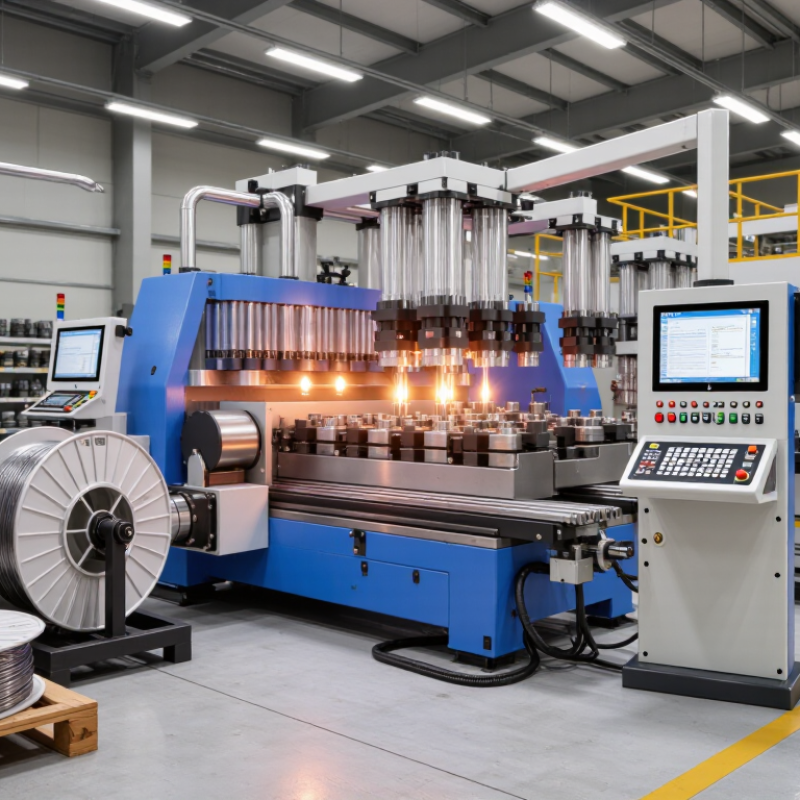
A rod breakdown machine converts thick metal rod into smaller wire through repeated drawing passes. The rod moves through hardened dies, where each pass reduces its diameter. Drawing blocks pull the material forward at controlled speeds. Lubrication limits friction, heat, and surface damage during this process.

A typical line includes a payoff, drawing blocks, dies, cooling equipment, an annealer, and a take-up unit. The annealer restores ductility after heavy deformation. This matters when the wire must survive later stranding, insulation, or forming operations. Operators monitor diameter, tension, temperature, elongation, and surface appearance. Small changes can affect the entire coil.

Precision matters most.

The best machine type in 2026 depends on material, input diameter, target size, production volume, and energy limits. A high-speed line may increase output, but it can expose poor lubrication or unstable tension. A slower system may deliver better consistency for demanding wire sizes. Experienced technicians should inspect die wear and cooling performance regularly. Digital controls improve traceability, though they cannot replace careful setup.

One practical lesson deserves attention: maximum speed is not always the best setting. A minor alignment error can create scratches, ovality, or frequent wire breaks. Machine selection should consider accessible maintenance, reliable safety systems, spare-part availability, and measurable process data. The “best” design is often the one that operators can adjust correctly every shift.

What Is the Best Type of Rod Breakdown Machine in 2026? — What a Rod Breakdown Machine Is and How It Works
A rod breakdown machine reduces the cross-sectional area of copper, aluminium, or alloy rod by drawing it through a sequence of dies. The comparison below uses representative engineering ranges; the exact specification depends on the material, rod grade, die design, lubrication system, and production target.
Machine Type Typical Inlet Rod Diameter Typical Finished Diameter Range Typical Line Speed Pass Arrangement Main Strengths Best-Fit Applications
Single-Block Rod Breakdown Machine Approximately 8–12 mm Approximately 1.5–4.0 mm Up to about 1,000–1,500 m/min Several dies mounted in one drawing block Simple layout, lower initial investment, easier access for maintenance, and suitable for standard production volumes General-purpose copper or aluminium wire production, replacement lines, and plants with moderate output requirements
Tandem Rod Breakdown Machine Approximately 8–12 mm Approximately 1.0–3.5 mm About 1,200–2,000 m/min Two coordinated drawing blocks arranged in series Higher throughput than a single block, better distribution of reduction, and improved productivity for continuous operation Medium- to high-volume production where floor space and output balance are important
Multi-Block Rod Breakdown Machine Approximately 8–12 mm Approximately 0.8–3.0 mm About 1,500–2,500 m/min Multiple synchronized blocks with staged reductions High production capacity, controlled reduction per pass, and good suitability for automated continuous lines Large cable plants, high-volume conductor production, and operations requiring consistent long-run output
Wet Rod Breakdown Machine Approximately 8–12 mm Approximately 0.8–3.0 mm About 1,000–2,000 m/min Drawing dies and capstans operate with liquid lubricant and coolant Effective heat removal, improved die lubrication, reduced surface damage, and better control during high-reduction drawing Fine copper wire, demanding surface-finish requirements, and production using water-soluble or emulsion-based lubricants
Dry Rod Breakdown Machine Approximately 8–12 mm Approximately 1.5–4.0 mm About 800–1,500 m/min Drawing dies operate with solid or minimal lubricant, without a flooded cooling zone Simpler fluid management, lower coolant consumption, and easier housekeeping in suitable applications Applications where the material, speed, and surface requirements permit dry or low-lubricant drawing
High-Speed Fine Rod Breakdown Line Approximately 8–10 mm Approximately 0.8–2.0 mm About 1,800–3,000 m/min High-speed synchronized blocks with automated tension and process control Maximum output per line, precise speed matching, reduced operator intervention, and strong process repeatability High-volume production of conductor wire where line speed, uptime, and dimensional consistency are priorities

Selection guideline: For most 2026 installations, a multi-block wet rod breakdown machine is the strongest all-round choice when high output, heat control, surface quality, and continuous operation are required. A single-block or dry machine may be more economical for moderate production volumes, simpler product ranges, or lower operating complexity. Final selection should be verified against material type, reduction schedule, die configuration, motor power, cooling capacity, allowable wire tension, and required finished-wire tolerance.

Key Machine Types and Their Main Differences

What Is the Best Type of Rod Breakdown Machine in 2026?

Rod breakdown machines differ mainly in wire count, drawing control, speed, and reduction capacity. A single-wire straight-line machine gives operators precise tension control and simpler die changes. It suits varied sizes, smaller batches, and plants that value flexibility. A multi-wire machine processes several wires simultaneously. It offers higher output per square metre, but setup errors can multiply across every line. Heavy-duty block machines handle larger reductions and thicker copper rod. They need stronger cooling, careful lubrication, and more robust maintenance routines.

The choice matters as copper demand rises. S&P Global’s 2024 Future of Copper study projects global demand could reach 42 million tonnes annually by 2035, creating pressure for higher productivity. The International Energy Agency also identifies copper as a critical material for electrification. Yet maximum speed is not always the best measure. A multi-wire system may reduce labour costs, while a single-wire line can reduce waste during frequent product changes. Energy consumption, die life, annealing compatibility, and spare-part access deserve equal attention. Small details matter.

In field evaluations, I would compare kilograms per kilowatt-hour, not only rated speed. That figure is often overlooked. Some published machine data also assumes ideal rod quality and stable cooling conditions. Real production is less forgiving. A plant with mixed orders may gain more from flexible single-wire equipment than from a faster multi-wire design. Final selection should follow measured production data, operator experience, and a realistic maintenance plan.

How to Compare Capacity, Precision, and Energy Efficiency

What Is the Best Type of Rod Breakdown Machine in 2026?

Choosing a rod breakdown machine requires more than comparing advertised speed. Capacity should be measured in tonnes per hour under realistic inlet conditions. Include copper grade, rod diameter, reduction schedule, and stoppage time. The International Copper Study Group reported refined copper usage of over 26 million tonnes in 2023. That scale makes stable throughput increasingly important for producers. A machine producing faster but causing frequent wire breaks may perform worse in practice.

Precision deserves equal attention. Check finished-wire diameter tolerance, ovality, surface quality, and tension control. Modern production lines should record these values continuously. The International Organization for Standardization identifies measurement control as a foundation of reliable manufacturing systems. Still, factory data can expose uncomfortable weaknesses. A machine may meet its catalogue tolerance only during short trials. Ask for long-run results, not polished demonstrations.

Energy efficiency should be compared through kilowatt-hours per tonne, not motor size alone. The International Energy Agency reports that industry uses roughly 37% of global final energy. Efficient drives, optimized cooling, low-friction capstans, and reduced idle running can lower operating costs. Regenerative braking may help, but its value depends on production cycles. I would request twelve months of energy records before trusting a claimed saving. Some comparisons remain imperfect because material quality and operator habits change the result.

Best Rod Breakdown Machine for Different Production Needs

What Is the Best Type of Rod Breakdown Machine in 2026?

The best rod breakdown machine depends on production goals, not appearance or advertised speed. A high-volume copper wire plant may need a multi-die machine with strong capstan control. It should maintain stable tension while reducing rod through several dies. This reduces wire diameter gradually and limits surface damage. Operators should inspect the cooling system, die alignment, and take-up tension during trial runs. Small errors become visible as scratches, ovality, or frequent wire breaks.

Different production needs require different designs. For thin conductor production, precise tension control and responsive automation matter most. For larger diameters, a rigid frame and high torque motor can provide better stability. Plants changing sizes often should consider quick die replacement and accessible threading paths. These features can shorten setup time, especially when several orders share one shift. A compact machine may suit limited floor space, but restricted access can make maintenance frustrating.

Energy use also deserves attention. Efficient motors and controlled cooling can reduce operating costs over long shifts. Experienced teams should compare actual kilograms per hour, not only the rated maximum. No machine wins every shift. A model running below its limit may produce steadier wire than an overloaded system. Still, production data can be incomplete, and operator skill affects the result. A practical evaluation should record break frequency, die life, power consumption, noise, and changeover time before purchase.

Safety, Maintenance, and Long-Term Operating Costs

What Is the Best Type of Rod Breakdown Machine in 2026?

The best rod breakdown machine is not simply the fastest model. It should combine enclosed guarding, reliable emergency stops, automatic lubrication, and accessible die changes. A multi-pass machine with condition monitoring can reduce unexpected stoppages. However, added sensors create more components to inspect. That trade-off is easy to underestimate.

Safety must guide the purchase. ISO 12100 supports risk assessment across design, operation, cleaning, and maintenance. The U.S. Department of Energy reports that motor-driven systems use about 70% of industrial electricity. Therefore, efficient motors, optimized line speed, and variable-speed control can influence long-term costs significantly. Maintenance records should track bearing temperature, vibration, lubricant condition, and die wear. A small vibration change may appear weeks before a major failure. Still, predictive maintenance is not automatically cheaper. Poor sensor calibration can produce false alarms and wasted labor.

Tips: Ask suppliers for five years of maintenance data, not only output figures. Compare energy use per tonne, die consumption, lubrication intervals, guarding access, and average repair time. The U.S. Department of Energy’s Operations & Maintenance Best Practices guide links planned maintenance with improved reliability and lower operating waste. Keep critical bearings and approved electrical parts on site. Review the list every quarter. One overlooked spare can stop an entire shift. My practical concern is simple: many plants buy impressive machines, then underfund training. That decision quietly increases risk and operating cost.

We value your privacy.

By using this site you agree to the use of cookies by the company in accordance with the Privacy Policy

Have a questions or want to know more about our company? We'll be expecting you.